
Become a certified professional in Halal practices today! Join us to enhance your skills and expertise—take the first step towards a rewarding future!
Guideline For Sertu (Purification) According To Islamic Perspective
1. Purpose
This sertu guidelines is prepared as a reference for all parties involved in managing the sertu (ritual cleansing) process for factories, premises, equipment, clothing, or human body parts that come into contact with najis mughallazah (severe impurity) to ensure they are purified according to Islamic law. It also provides detailed guidance for those in need of instructions regarding the sertu process in accordance with Islamic teachings.
Guideline For Sertu (Purification) According To Islamic Perspective By JAKIM (PDF)
2. Background
2.1 Islam emphasizes both physical and spiritual cleanliness. Physical cleanliness includes personal hygiene, cleanliness of places, clothing, equipment, and others. This is crucial to ensure that all acts of worship performed by Muslims are in line with Shariah (Islamic law).
2.2 Therefore, every Muslim is responsible for learning and practicing the principles of cleanliness and purification in their daily lives.
2.3 Any industry, premises, equipment, clothing, etc. contaminated with najis mughallazah (such as pigs, dogs, and their derivatives) must undergo sertu by washing once with water mixed with soil followed by six washes with pure water. This ruling is based on the hadith of Prophet Muhammad (SAW):
Abu Hurairah (RA) reported that the Prophet (SAW) said:
“Purify the container that a dog has licked by washing it seven times, the first time with soil.”
(Hadith narrated by Muslim)
2.4 The issue of sertu frequently arises, especially among both Muslims and non-Muslims. Some factories, premises, ships, and hotels owned by non-Muslims may produce food or provide services for Muslims while using utensils, cookware, or equipment contaminated with najis mughallazah, such as those confirmed to contain pork DNA.
2.5 This includes kitchens, cooking utensils, slaughterhouses, residential homes, vehicles, and other places contaminated with najis mughallazah. Therefore, Malaysian Muslims require a clear guideline on proper purification (sertu) in accordance with Islamic teachings.
3. Definition of Sertu
3.1 According to the Kamus Dewan (Fourth Edition), sertu refers to purifying any part of the body contaminated with najis mughallazah (dogs and pigs) using water mixed with soil once, followed by six washes with pure water. It is similar to the process of tanning animal hides (samak).
3.2 Sertu also refers to the purification of anything contaminated with najis mughallazah, which includes dogs, pigs, and their derivatives. The purification process requires washing with soil-mixed water once, followed by six washes with clean water.
4. Interpretation
For the purposes of this guideline, unless otherwise stated:
- Najis Mughallazah: Any substance originating from dogs or pigs, including their saliva, flesh, fat, bones, or any extract derived from them, is considered a severe impurity (najis berat).
- Pure Water (Air Mutlak): Water that remains uncontaminated by impurities that would alter its taste, color, or smell.
- Ain Al-Najasat: A visible impurity that can be seen with the naked eye.
- Sertu Process: Washing najis mughallazah seven times—once with soil-mixed water and six times with pure water. Ideally, the first wash should be with water mixed with soil, followed by six washes with clean water.
5. The Wisdom Behind Sertu
Sertu is an act of worship recommended by Prophet Muhammad (SAW), as evidenced by authentic hadiths. This practice is categorized as “li ta’abbudi”, meaning it is performed as prescribed by the Prophet.
The wisdom behind sertu includes:
- Preventing diseases caused by germs and bacteria that may be present in dogs and pigs.
- Demonstrating that Islam upholds cleanliness in all aspects of daily life, including the use of utensils and tools.
6. Specifications for Soil
The soil used in sertu must:
- Be free from any impurities.
- Not contain any contaminants, such as oil or other pollutants.
- Not be previously used for purification (musta’mal).
7. Specifications for Water
The water used in sertu must:
- Be pure and clean (mutlak water).
- Not be previously used (musta’mal water).
- Not be contaminated with any impurities.
8. Exemptions
- Sertu does not apply to the internal organs of a living human being.
(For example, if a person consumes something contaminated with najis mughallazah, they are not required to drink soil-mixed water for purification.) - A person who converts to Islam is not required to perform sertu on their entire body, even if they had previously come into contact with najis mughallazah.
Methods of Performing Sertu
9. Method of Performing Sertu According to Shariah
There are two methods of performing sertu in accordance with Shariah:
i. Sertu using soil.
ii. Sertu using clay soap.
Sertu for Premises and Utensils
10. Method of Sertu for Premises and Utensils Using Soil
When a pure object comes into contact with najis mughallazah in a wet state, it must undergo sertu to restore its purity, following these steps:


11. Method of Preparing Soil
The soil used for sertu must be pure, free from any impurities, uncontaminated by substances such as oil, and must not have been previously used for tayammum (musta’mal). The recommended method for preparing suitable soil is as follows:
- The best type of soil to use is clay soil, similar to the type used for making pottery, sourced from at least 4 meters below the ground surface.
- The soil should be sun-dried, crushed into fine dust, and ensured to be free from any impurities.
- The collected soil dust will serve as the main ingredient for the sertu process.
- However, if obtaining high-quality soil is difficult, it is sufficient to use any available soil that is confirmed to be pure and clean.
12. Example of Sertu for Pharmaceutical Machines, Containers, Kitchens, Pipes, and Tanks
If a factory has complex equipment that is difficult to dismantle, such as those used in pharmaceutical manufacturing, the sertu process can be performed as follows:
- The soil-to-water ratio should be between 0.6% to 2.5%, depending on the required water concentration.
- For sensitive equipment, the soil-water mixture can be placed in a spray bottle and sprayed onto the surface to be purified, allowing the water to flow over it as the first wash.
- For compressor parts that compact powder into medicine, a moist soil mixture should be prepared. This mixture can be combined with a neutral base component of the medicine and passed through the manufacturing machine as the first wash, followed by six additional washes using other moist mixtures.
- For operational lines such as conveyor belts, a cloth or sponge should be soaked in soil-mixed water and applied along the entire operational line for the first wash. This process should then be repeated six more times using either pure water or a mixture containing a certified cleansing agent.
- For sertu of containers, a sufficient amount of soil-mixed water should be prepared and then sprayed onto the surface of the container until it flows over it. The surface should then be scrubbed with a brush to ensure even distribution of the water across the entire container surface.
- For sertu of kitchens, the kitchen area must first be cleansed of oil and visible impurities (ain najasat) before evenly applying soil-mixed water over the entire surface.
- For sertu of pipes, a sufficient amount of soil-mixed water should be prepared and flushed through the pipe system, either using a pump or other suitable equipment.
- For sertu of storage tanks, the soil-mixed water should be evenly applied across the inner surface of the tank to ensure proper purification.
Using Clay Soap
13. Method of Sertu Using Clay Soap
All industries, premises, equipment, clothing, transportation, and human body parts that come into contact with najis mughallazah may use clay soap as a substitute for soil in the sertu process. This ruling was approved by the 76th Muzakarah of the National Fatwa Committee for Islamic Religious Affairs, held from 21-23 November 2006, as follows:
“Soap containing clay elements may be used for the purification (samak) of najis mughallazah, provided that the clay is pure, its percentage in the soap is higher than other ingredients, and the purification method follows Islamic law (Shariah).”
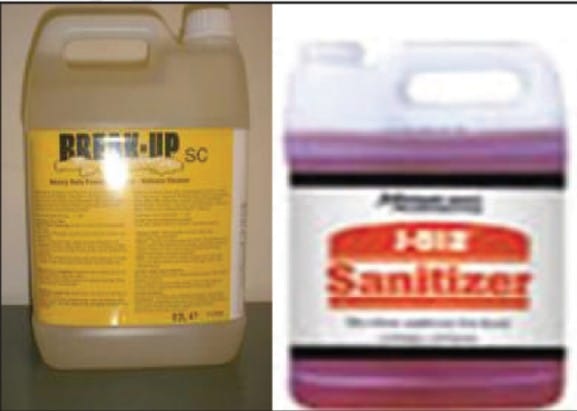
14. Method of Using Clay Soap


Sertu of Hands Contaminated with Najis
15. Method for Sertu of Hands Contaminated with Najis
The following steps should be followed to purify hands that have come into contact with najis mughallazah:


Sertu of a Contaminated Surface
16. Method for Sertu of a Contaminated Preparation Table
To purify a preparation table that has been contaminated with najis mughallazah, follow these steps:


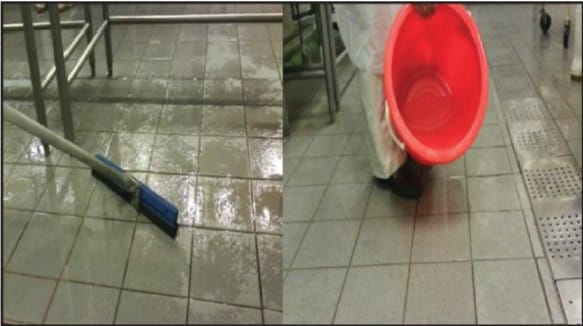
17. Method for Sertu of Floors (Preparation/Receiving Areas) Contaminated with Najis Mughallazah
To purify a floor in the preparation or receiving area that has been contaminated with najis mughallazah, follow these steps:

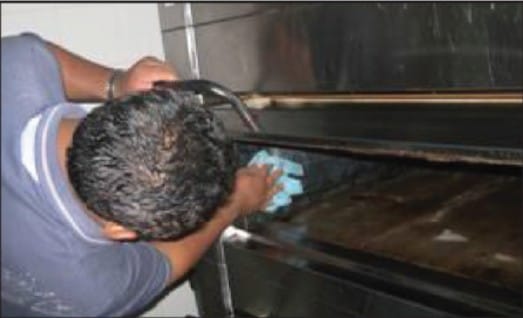
18. Method for Sertu of Machines Contaminated with Najis Mughallazah
To purify a machine that has been contaminated with najis mughallazah, follow these steps:



Practical Applications of Sertu
19. The Sertu Method is Also Applied in the Following Situations:
- When a company purchases used machinery that is believed to have been previously contaminated with najis mughallazah.
- When changing the production process from non-halal products to halal products, using the same machinery.
- When a storage area previously used for non-halal products is converted for halal product storage (e.g., frozen and chilled storage).
- When purchasing a residence from a non-Muslim, and the cleanliness and purity status of the home is believed to be contaminated with najis mughallazah.
- When a vehicle that previously transported non-halal products is being converted for halal product transportation.
- When clothing or other items have come into contact with najis mughallazah.
Verification of Sertu
20. The Sertu Process Must Be Monitored and Verified by the State Islamic Religious Department (JAIN) for Factories, Premises, Hotels, and Other Facilities
- The company’s Halal Committee members must ensure that any change or transition in production or storage from non-halal to halal products does not occur again in the future.
- The Halal Executive (Food Quality Management) must contact JAIN or JAKIM if there are any halal-related concerns, especially those involving the sertu process.
- The company must submit an official sertu application letter to JAIN if required.
- The Halal Committee members must appoint only Muslim workers to carry out the sertu process.
- JAIN officers must monitor and verify that the sertu process is conducted correctly and in accordance with Shariah guidelines.
- An official sertu verification letter must be issued by JAIN to the respective company as proof of compliance.
Conclusion
Islam places great importance on cleanliness, particularly in the use of daily utensils and equipment.
The sertu process is vital to ensure hygiene and the removal of impurities, especially najis mughallazah.
All relevant parties must adhere to these guidelines to ensure that sertu is carried out correctly according to Islamic law.
Disclaimer: This article is UHAC’s translation of the original document by JAKIM. It is not approved or endorsed by JAKIM.
