
Become a certified professional in Halal practices today! Join us to enhance your skills and expertise—take the first step towards a rewarding future!
Table of Contents
1. What is Sertu?

1.1 What is sertu?
Sertu is an Islamic purification method used to cleanse objects or areas contaminated by severe impurities (najis mughallazah), specifically those related to dogs and pigs.
The process involves washing the affected area seven times, with the first wash using water mixed with soil, followed by six washes with pure water.
This practice ensures both physical and spiritual cleanliness, adhering to Islamic jurisprudence.
Read more: American Halal Foundation: What is Sertu?
1.2 What is sertu in Islam?
In Islam, sertu is a purification ritual mandated for cleansing items tainted by major impurities, particularly those associated with canines and swine.
The procedure is rooted in the teachings of Prophet Muhammad (PBUH), emphasizing the importance of purity in a Muslim’s life.
By performing sertu, Muslims maintain both physical hygiene and spiritual sanctity, ensuring that their practices align with Islamic principles.
Read more: Pejabat Mufti Wilayah Persekutan: Type and method of soil for sertu
1.3 What does sertu mean?
The term sertu refers to the specific Islamic cleansing method applied when dealing with severe impurities.
It is derived from the Arabic word “satr,” meaning “to clean or purify.”
This purification process is essential for restoring the permissible (halal) status of objects or areas contaminated with major impurities, ensuring they are suitable for use by Muslims.
1.4 What is sertu in English?
In English, sertu can be described as an Islamic ritual purification process for cleansing severe impurities.
While there isn’t a direct English equivalent for the term, it encompasses the concept of ritual purification involving specific washing procedures to remove major impurities, particularly those from dogs and pigs.
This practice is integral to maintaining both physical and spiritual cleanliness in Islam.
Read more: Pejabat Mufti Wilayah Persekutan: The Ruling of sertu using Taharah soap
2. When and Why is Sertu Required?
2.1 When is sertu necessary?
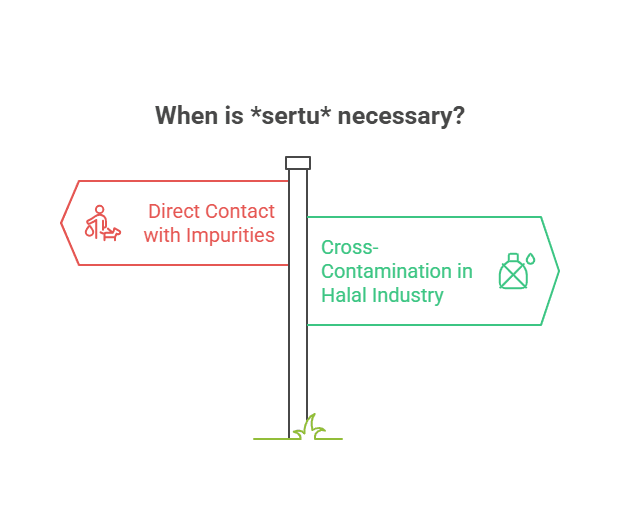
Sertu is required when an object or surface comes into contact with severe impurities (najis mughallazah), specifically those related to dogs and pigs.
This includes direct contact with their flesh, skin, saliva, or any bodily discharge.
For instance, if a utensil is licked by a dog or contaminated by pork products, performing sertu is mandatory to purify the item.
Additionally, in halal industries, sertu is necessary when there’s cross-contamination between halal products and major impurities, ensuring the integrity of halal certification.
2.2 Why is sertu important?
The significance of sertu lies in its role in maintaining both physical and spiritual purity, as emphasized in Islamic teachings.
By adhering to the sertu purification process, Muslims ensure that their practices align with the principles of cleanliness and hygiene mandated in Islam.
This ritual not only fulfills religious obligations but also upholds the integrity of halal products, especially in industries where contamination with major impurities can compromise the halal status.
Therefore, sertu is crucial for both personal observance and in maintaining public trust in halal-certified goods and services.
3. How to Perform Sertu?
3.1 How to perform sertu?
To perform sertu, first, remove any visible impurities from the contaminated area.
Then, wash the area seven times: the first wash should be with water mixed with soil, followed by six washes with clean water.
Ensure that the soil used is clean and free from impurities.
This method is based on the hadith of Prophet Muhammad (PBUH), emphasizing the importance of using soil in the purification process.
3.2 How to do sertu?
The sertu process involves a specific sequence of washing to ensure purification.
After removing any physical impurities, prepare a mixture of clean soil and water for the first wash.
Thoroughly scrub the contaminated area with this mixture.
Subsequently, rinse the area six more times with pure water, ensuring that each wash removes any remaining traces of impurity.
This ritual cleansing restores the object’s purity, making it suitable for use in religious practices.
4. Sertu for Kitchen and Household Items
4.1 How to sertu utensils?
When a utensil becomes contaminated with major impurities, such as contact with dog saliva or pork products, it requires sertu purification.
Begin by cleaning off any visible impurities.
Then, wash the utensil seven times: start with a mixture of clean soil and water, followed by six washes with pure water.
Ensure that the utensil is thoroughly scrubbed during each wash to remove all traces of impurity.
This process restores the utensil’s purity, allowing it to be used in food preparation again.
4.2 How to sertu a fridge?
If a refrigerator has been contaminated by major impurities, such as storing non-halal items like pork, it must undergo the sertu process.
First, remove all contents and clean any visible impurities from the surfaces.
Prepare a mixture of clean soil and water, and use it to wash the contaminated areas thoroughly.
After the initial wash, rinse the surfaces six more times with pure water.
Ensure that all shelves, drawers, and compartments are adequately cleaned during each wash.
This purification process ensures that the fridge is suitable for storing halal items.
4.3 How to sertu a microwave?
To purify a microwave contaminated with major impurities, start by cleaning any visible residues.
Then, using a mixture of clean soil and water, thoroughly wash the interior surfaces of the microwave.
After this initial wash, rinse the interior six times with pure water.
Ensure that all areas, including the turntable and inner walls, are adequately cleaned during each wash.
This process restores the microwave’s purity, making it suitable for heating and cooking halal food.
5. Sertu for Personal Hygiene
5.1 How to sertu hands?
If one’s hands come into contact with major impurities, such as dog saliva or pork products, sertu purification is necessary.
Begin by washing the hands with a mixture of clean soil and water, scrubbing thoroughly to remove any traces of impurity.
Then, rinse the hands six times with pure water, ensuring that each wash cleanses the skin completely.
This ritual ensures both physical and spiritual cleanliness.
5.2 How to sertu the body?
In cases where parts of the body have been contaminated with major impurities, such as contact with dog saliva, sertu purification is required.
First, remove any visible impurities from the affected area.
Then, wash the area with a mixture of clean soil and water, scrubbing gently to ensure thorough cleansing.
After this initial wash, rinse the area six more times with pure water.
Ensure that each wash removes any remaining traces of impurity, restoring both physical and spiritual purity.
5.3 How to sertu clothes?
When clothing becomes contaminated with major impurities, such as dog saliva or pork products, sertu purification is necessary.
Begin by removing any visible impurities from the fabric.
Then, immerse the affected area in a mixture of clean soil and water, scrubbing gently to ensure the impurity is removed.
After this initial wash, rinse the clothing six times with pure water, ensuring that each rinse thoroughly cleanses the fabric.
This process restores the clothing’s purity, making it suitable for wear during religious practices.
6. Sertu vs Samak – What’s the Difference?
6.1 Understanding Sertu
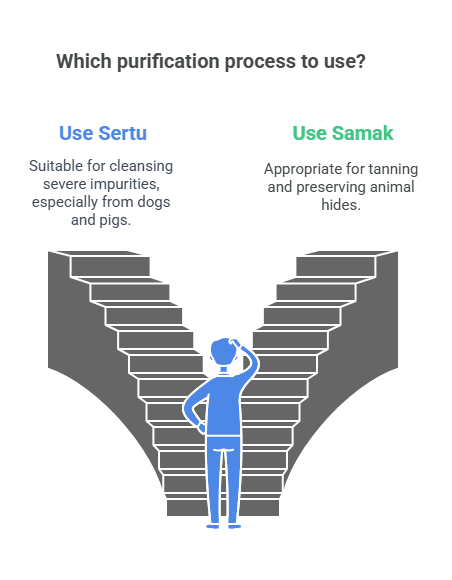
Sertu is the Islamic purification process specifically designated for cleansing severe impurities (najis mughallazah), particularly those associated with dogs and pigs.
The method involves washing the contaminated area seven times, with the first wash using water mixed with soil, followed by six washes with pure water.
This practice ensures both physical and spiritual cleanliness, adhering to Islamic jurisprudence.
Read more: Pejabat Mufti Wilayah Persekutuan: The Difference Between Sertu And Samak
6.2 Understanding Samak
Samak, on the other hand, refers to the tanning process used to purify animal hides, making them suitable for use.
This involves treating the skins with specific substances to remove impurities and preserve the material.
The process is distinct from sertu and is primarily concerned with the preparation of animal hides.
6.3 Key Differences Between Sertu and Samak
While both sertu and samak are purification processes in Islam, they serve different purposes.
Sertu is employed to cleanse objects or areas contaminated by severe impurities, specifically those from dogs and pigs, through a series of washes involving water and soil.
Samak, conversely, is the tanning process used to purify and preserve animal hides, making them
7. What is Sabun Sertu?
The sertu purification process traditionally requires soil mixed with water, but modern advancements have introduced practical alternatives such as sabun sertu (Sertu soap) and packaged tanah sertu (Sertu soil or Sertu Clay).
This section explores what sabun sertu is, where to find it, and how to source tanah sertu for purification purposes
7.1 What is Sabun Sertu?
Sabun sertu is a specialized cleansing soap formulated to assist in the sertu purification process.
Traditionally, sertu involves washing an object seven times, with the first wash using soil and water.
However, sabun sertu contains purified clay or soil components, providing a more convenient and hygienic alternative.
This modern adaptation ensures adherence to Islamic guidelines while making the sertu process more accessible, especially in urban settings where clean soil may not be readily available.
7.2 Where to Buy Sabun Sertu?
There are multiple ways to purchase sabun sertu, including:
- Physical Stores: Islamic bookstores, halal marts, and selected pharmacies often carry sabun sertu.
- Online Retailers: E-commerce platforms like Lazada, Shopee, and Amazon may list sabun sertu products.
- Specialty Websites: Websites dedicated to Islamic products or halal living often stock sabun sertu.
It is essential to verify the authenticity and halal certification of the product before purchasing.
7.3 Popular brands offering sabun sertu
One well-known brand offering sabun sertu is Safi, which produces a range of halal personal care products, including those specifically designed for sertu purification.
Safi Sertu products are available in major supermarkets, halal specialty stores, and online marketplaces.
Checking the official Safi website or authorized retailers is recommended for purchasing authentic products.

8. Where to Find Tanah Sertu?
8.1 Understanding tanah sertu
Tanah sertu refers to the soil used in the sertu purification process.
For those preferring traditional methods, clean and uncontaminated soil can be sourced from gardens or natural environments, ensuring it is free from impurities.
However, for convenience, pre-packaged tanah sertu is available in various forms and can be sourced from reputable suppliers.
8.2 Where to buy tanah sertu
- Islamic Stores: Some Islamic specialty stores offer pre-packaged tanah sertu, which has been processed and purified for immediate use.
- Online Retailers: E-commerce platforms may list tanah sertu products, often labeled as “ritual purification soil” or “halal cleansing soil.”
When sourcing soil, whether naturally or commercially, ensure it is clean, free from contaminants, and suitable for sertu purification to maintain its integrity.

9. Is Sertu Necessary for Non-Muslims?
9.1 Is sertu required for non-Muslims?
The sertu purification process is a religious obligation specific to practicing Muslims.
Non-Muslims are not required to perform sertu as it pertains to Islamic jurisprudence concerning ritual purity.
However, in contexts where non-Muslims are involved in the preparation or handling of products intended for Muslim consumers—such as in the food industry or hospitality sector—understanding and implementing sertu procedures can be crucial.
This ensures that products and services remain compliant with halal standards, thereby respecting the religious practices of Muslim clients and consumers.
9.2 Do non-Muslims need to perform sertu?
While non-Muslims are not religiously obligated to perform sertu, there are scenarios where they might need to implement sertu procedures, especially in professional settings:
- Food Industry: Non-Muslim staff working in halal-certified establishments must ensure that any contamination with major impurities is addressed through sertu to maintain certification.
- Hospitality Sector: Hotels and restaurants aiming to cater to Muslim guests may perform sertu in kitchens or dining areas to ensure compliance with halal requirements.
In such cases, proper training and understanding of sertu are essential to uphold the standards expected by Muslim consumers.
10. Common Mistakes in Performing Sertu
10.1 Common mistakes in sertu
Performing sertu requires adherence to specific steps to ensure purification. Common mistakes include:
- Incorrect Sequence: Not following the prescribed order of washing, especially neglecting the initial wash with soil mixed with water.
- Insufficient Washing: Failing to complete the full seven washes as mandated.
- Contaminated Soil: Using soil that is impure or mixed with contaminants, which can invalidate the purification process.
- Improper Rinsing: Not ensuring that each wash thoroughly cleanses the impurity, leaving traces behind.
To avoid these errors, it’s crucial to understand the sertu procedure thoroughly and ensure that all materials used are clean and compliant with Islamic guidelines.
10.2 Wrong ways to perform sertu

Some incorrect practices in performing sertu include:
- Skipping the Soil Wash: Directly washing with water without the initial soil mixture, which is a fundamental component of sertu.
- Using Substitutes for Soil: Employing cleaning agents or chemicals instead of soil without valid scholarly approval.
- Partial Washing: Only washing the visibly contaminated part and neglecting surrounding areas that may also be affected.
Adhering strictly to the prescribed method ensures the effectiveness of the sertu purification process.
11. Sertu in the Food and Manufacturing Industry
11.1 Sertu in the food industry
In the food industry, maintaining halal integrity is paramount, especially in facilities that handle both halal and non-halal products.
Cross-contamination can occur through shared equipment or storage spaces.
For instance, mixers used for sauces containing non-halal ingredients like wine or pork derivatives must undergo sertu before being used for halal-certified products.
Similarly, packaging lines and storage containers previously in contact with non-halal items require sertu to ensure purity.
11.2 How to sertu in food processing?
To perform sertu in food processing, first dismantle the equipment or isolate the contaminated area.
Begin by applying a mixture of clean soil and water to the affected surfaces for the initial wash. This is followed by six washes with clean water.
Ensure that all parts of the equipment are thoroughly cleaned during each wash to remove any traces of impurities.
This process restores the equipment’s purity, making it suitable for halal production.
11.3 Sertu for halal certification
Adhering to sertu procedures is crucial for obtaining and maintaining halal certification.
Halal certification bodies require that any equipment or surfaces contaminated with major impurities undergo sertu to ensure compliance with Islamic law.
Proper documentation of the sertu process, including the methods used and personnel involved, is often necessary during certification audits.
Read more: American Halal Foundation: Halal Sanitation
11.4 Sertu requirements in manufacturing
Manufacturing facilities must establish standard operating procedures (SOPs) for sertu to handle instances of contamination.
This includes training staff on sertu methods, ensuring the availability of necessary materials like clean soil, and maintaining records of all sertu activities.
Regular audits should be conducted to ensure adherence to these procedures, thereby maintaining the halal integrity of the manufacturing process.
11.5 Is sertu necessary for halal factories?
Yes, sertu is necessary for halal factories, especially if there’s a risk of contamination with major impurities.
Even in facilities dedicated to halal production, unforeseen incidents can occur, necessitating sertu to maintain purity.
Implementing sertu procedures ensures that the factory upholds the highest standards of cleanliness and complies with halal certification requirements.
12. Sertu in the Logistics Industry

12.1 Sertu in the logistics industry
In the logistics industry, maintaining the halal status of products during transportation and storage is crucial.
Sertu plays a vital role in ensuring that any contamination with major impurities is addressed promptly.
This is particularly important in shared transportation and storage facilities where cross-contamination can occur.
12.2 How to sertu transport vehicles?
To perform sertu on transport vehicles, first clean any visible impurities from the contaminated areas.
Then, wash these areas with a mixture of clean soil and water, ensuring thorough coverage.
After the initial wash, rinse the areas six times with clean water. It’s essential to ensure that all parts of the vehicle that came into contact with impurities are adequately cleaned during each wash.
12.3 Sertu for halal logistics
Implementing sertu in halal logistics ensures that products remain pure throughout the supply chain.
Logistics providers should establish protocols for sertu, train staff accordingly, and maintain records of all cleansing activities.
This not only ensures compliance with halal standards but also builds trust with consumers regarding the purity of the products they receive.
12.4 Is sertu required for the halal supply chain?
Yes, sertu is required in the halal supply chain whenever there’s a risk of contamination with major impurities.
This includes transportation, storage, and handling processes. Implementing sertu procedures ensures that the entire supply chain maintains halal integrity, from production to the end consumer.
12.5 Sertu requirements in warehousing
Warehousing facilities must have sertu procedures in place to address any contamination incidents.
This includes training staff on proper sertu methods, ensuring the availability of necessary materials, and maintaining detailed records of all cleansing activities.
Regular inspections and audits should be conducted to ensure compliance with halal standards, thereby maintaining the integrity of stored products.
By understanding and implementing sertu procedures across various sectors, industries can ensure compliance with halal standards, maintain product integrity, and uphold consumer trust.
Conclusion: The Importance of Sertu in Daily Life and Industry
13.1 Why sertu remains relevant today
The sertu purification process is deeply rooted in Islamic teachings and continues to play a significant role in modern Muslim life.
Beyond personal hygiene, sertu is essential in industries such as food production, manufacturing, and logistics, ensuring that halal integrity is upheld.
As globalization connects supply chains, maintaining sertu practices helps businesses meet halal certification requirements and gain consumer trust.
13.2 How businesses can implement sertu effectively
For industries handling halal products, implementing sertu requires proper training, documentation, and adherence to best practices.
Establishing standard operating procedures (SOPs) for sertu, training employees, and maintaining records of purification processes are key to ensuring compliance with halal certification standards.
Companies should also invest in sabun sertu and other purification products to simplify the process.
13.3 The future of sertu in modern halal industries
With increasing consumer awareness about halal integrity, businesses must remain committed to sertu practices.
Advancements in technology may lead to new, approved purification methods that align with Islamic requirements while enhancing efficiency.
By integrating sertu into daily operations, companies can ensure compliance, gain market confidence, and contribute to the growth of the global halal industry.
13.4 Final thoughts on sertu
Whether for personal practice or industrial application, sertu is a crucial aspect of maintaining halal purity.
Understanding its importance and correctly implementing its procedures ensures compliance with Islamic teachings and regulatory standards.
For businesses, integrating sertu into their operations not only meets certification requirements but also strengthens consumer trust and market reputation.
By upholding sertu practices, individuals and industries alike can contribute to the preservation of halal standards worldwide.
